
Choose your Luberon base by the side of the range where your visits are, then by type of stay. A gîte is a whole house rented for your exclusive use; a chambre d’hôtes is a room in the host’s home, breakfast included. Without a car, stay in Cavaillon or Apt. Check any rating in the official files before paying.
L’essentiel
- A chambre d’hôtes has five rooms and fifteen guests at most, by law, with breakfast and linen included.
- Stars are proven by the rating decision, valid five years; épis and clés are checked on each network’s website.
- Perched villages are walked through steep lanes, which matters with luggage or a pushchair.
- From November to March, a town where daily life goes on, such as Apt or Cavaillon, is the safer base.
Périmètre For English-speaking visitors staying several nights in the Luberon. Detailed village guides are in French, starting with Où dormir dans le Luberon.
What is the difference between a gîte and a chambre d’hôtes?
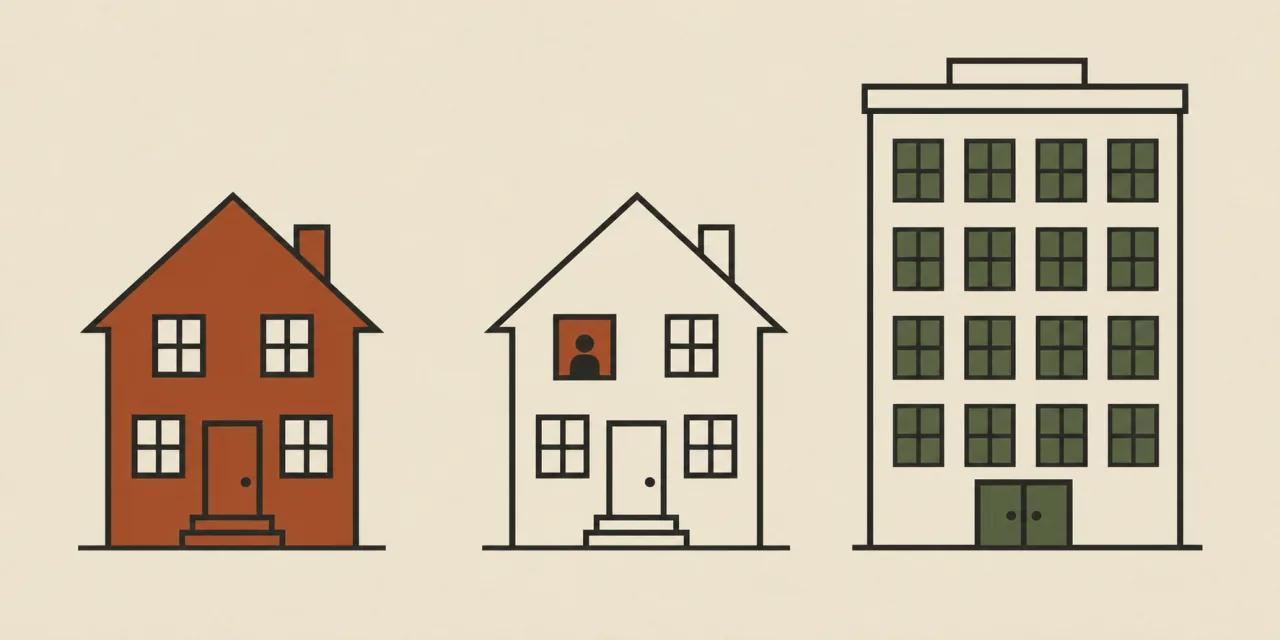
A gîte is, in legal terms, almost always a meublé de tourisme: a furnished house or flat rented as a whole, for your exclusive use, to short-stay visitors (article D324-1 of the French Tourism Code, on Légifrance). You have your own kitchen, and in summer it is often rented by the week.
A chambre d’hôtes is the French equivalent of a bed and breakfast, with a legal definition. You sleep in the host’s own home; the house may offer five rooms at most, for fifteen guests at most, and the nightly price includes breakfast and linen (articles L324-3 and D324-13 of the Tourism Code). A house that rents eight rooms is not a chambre d’hôtes in the legal sense, whatever its listing says. Some hosts also offer a table d’hôtes, a single-menu meal at the family table, reserved for guests (Bpifrance Création, “Chambre d’hôtes” sheet); ask whether it is included in the price.
For a family of four staying a week, compare a gîte with two B&B rooms, and add to the second the meals you will not be able to cook. For a couple staying three nights, a chambre d’hôtes usually avoids the end-of-stay cleaning fee that weighs heavily on a short gîte rental.
How do you check stars, épis and clés?
Stars apply to furnished holiday rentals and follow a national standard published by Atout France; a rating lasts five years. There is no public national register of rated holiday rentals: Atout France’s public search covers hotels, campsites and holiday residences only. The proof is the rating decision issued to the owner after an inspection by an approved body; ask for it, with its date, before paying.
Épis (ears of wheat) are awarded by the Gîtes de France network, clés (keys) by Clévacances. Each network has its own grid, so three épis and three clés do not mean the same thing. None of these levels tells you the state of a house this season or the warmth of a welcome: they tell you what the property had to offer on the day it was inspected.
Which village should you choose as a base?
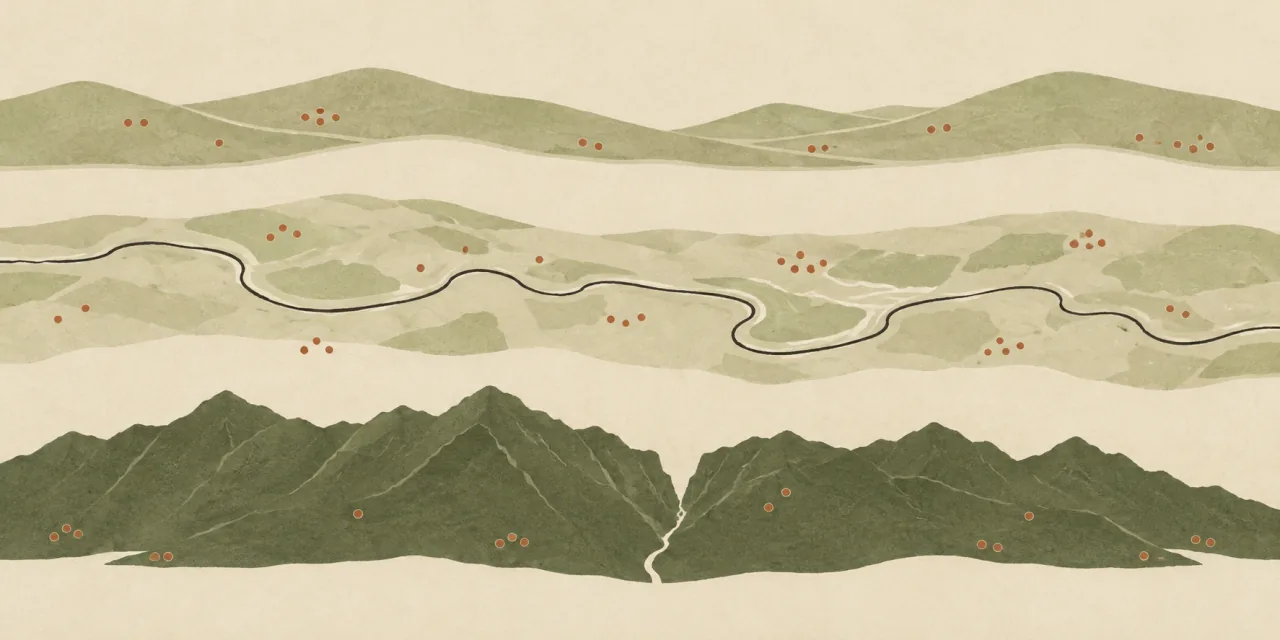
The area covered here falls into three bands. To the north, on the slopes of the Monts de Vaucluse, are Gordes, with Sénanque Abbey on its territory, and Roussillon, with its ochre trail. In the middle, the Calavon valley runs from the plain of Cavaillon in the west to Apt and Rustrel in the east. To the south, the Luberon range is cut by the Lourmarin gorge, the combe: the Petit Luberon to the west, with Oppède, Ménerbes, Lacoste and Bonnieux on its northern slope, and the Grand Luberon to the east, with Buoux. Lourmarin opens onto the south side of the range.
Pick the band where your main visits are. Villages within one band are linked by short roads; crossing from one band to another means crossing the valley or the combe. Perched villages such as Gordes, Roussillon, Ménerbes, Lacoste, Bonnieux and Oppède are walked through steep lanes, which matters with luggage or a pushchair. From November to March, small villages empty and many rentals close: for a winter stay, start from a town where daily life goes on, such as Apt or Cavaillon.
Each village has its own guide, in French, with its hamlets, access and seasons. Start with Où dormir dans le Luberon, which compares the eleven villages as bases.
Driving times between the eleven villages and to Cavaillon and Avignon TGV stations, calculated on 15 October 2026, are published (in French) in Où dormir dans le Luberon. Open data lists only 4 gîtes or B&Bs for these villages, too few to compare them; dated price surveys are not published.
Can you stay in the Luberon without a car?
Yes, from the right base. Cavaillon is the only town in the area with a railway station, served by regional TER trains; high-speed trains stop at Avignon TGV station. Cavaillon and Apt are served by regular buses of the regional ZOU! network, whose timetables change between summer and winter. For any other village, check the timetable of each line for your travel dates: a village without several departures a day is not a car-free base, however famous it is.
The French-language village quiz and budget estimator work without an account and help you narrow down the choice and compare listings on their full cost, tourist tax and cleaning fee included.
Read next
- Luberon B&Bs: how to choose a chambre d’hôtes
Articles on chambres d’hôtes in the Luberon (in French)
Find rated accommodation on the map
The map filters gîtes and B&Bs by type, label, pool, capacity and off-season opening, village by village (in French).

Journal de mise à jour
- — Correction de la méthode de vérification d’un meublé classé, qu’aucun fichier national public ne recense.
- — Publication de la page.